

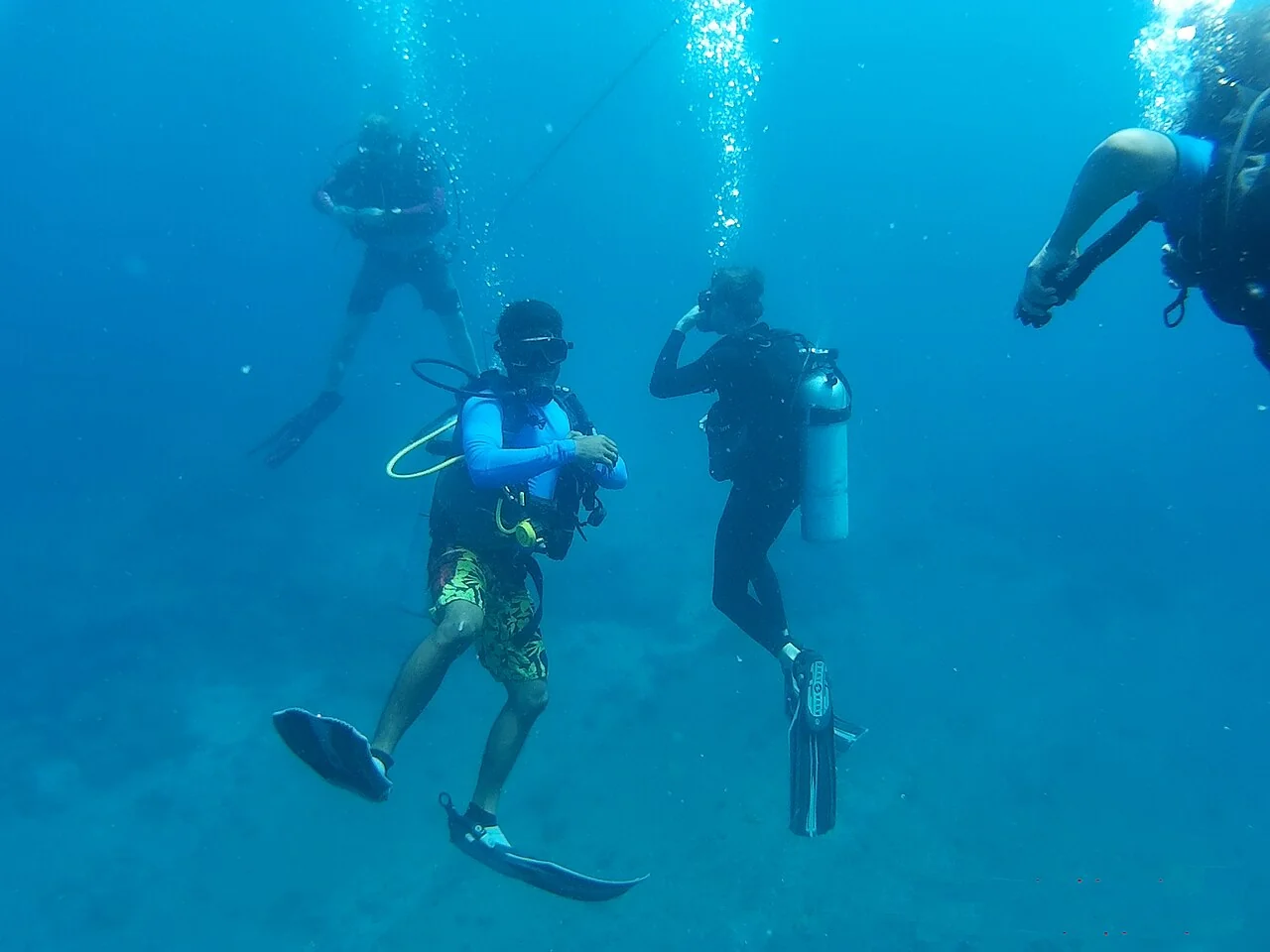
Scuba Diving & Coral Reefs
Where to dive and snorkel in the Andamans, what it costs, what you'll see, when to go — and how not to wreck the reef while you're at it.
Quick Information & Logistics
- Main dive bases
- Havelock (most operators, best sites), Neil (quieter), Port Blair / North Bay (intro dives)
- Season
- October – May; best visibility roughly January – April; monsoon closes most sites
- No experience?
- Discover Scuba (intro) dives from the shore or boat, ~40 min underwater; swimming ability helpful, not required
- Courses
- PADI / SSI Open Water (3–4 days) and Advanced widely offered on Havelock
- Rough cost
- Intro dive ₹3,500–6,500; fun dives ₹4,000–6,000 each; Open Water ₹22,000–30,000 (check current prices)
- Rule of thumb
- No flying for 18–24 h after your last dive — plan it before, not after, the ferry/flight day
Overview
The Andamans are India’s best diving by a distance: warm, clear water, hard-coral gardens, walls and pinnacles, and a fish list that runs from clownfish and parrotfish through turtles, rays, reef sharks, barracuda schools and — on the right day at the right site — dugong or manta. Havelock is the centre of it all, with a dozen-plus dive shops, boats going out every morning and enough sites for a week. Neil has a couple of quiet operators and less-visited reef. North Bay and a few Port Blair spots are where day-trippers do their first breath underwater. Snorkellers are well served too — the reefs off Elephant Beach, North Bay, Bharatpur and the Natural Bridge sit in a couple of metres of water.
Where to dive
- Havelock (Swaraj Dweep) — the sites everyone talks about: The Wall, Johnny’s Gorge, Dixon’s Pinnacle, Jackson’s Bar, Aquarium, Turtle Bay, Lighthouse (a night-dive favourite), Minerva Ledge. Beginners start at the shallow sites (Nemo Reef, Aquarium, Lighthouse); the pinnacles and gorge are for certified divers with some experience. Most shops are on the Beach 3–5 strip and near the jetty. See Havelock.
- Neil (Shaheed Dweep) — Bus Stop, Margherita’s Mischief, K-Rock, Junction: gentle sites, good coral, fewer boats. See Neil.
- North Bay — shallow shore-entry intro dives and sea walks; a taste, not the main course. See North Bay.
- Port Blair area — Chidiya Tapu, Cinque Island (day charter, permit), Rutland; sometimes offered by Port Blair operators.
- Snorkelling only? Elephant Beach, North Bay, Bharatpur, the reef flat at the Natural Bridge at low tide, and boat trips to Jolly Buoy / Red Skin in the Mahatma Gandhi Marine National Park from Wandoor (permit, seasonal). Even the sandbar at Ross & Smith has good shallow reef.
Options by experience
- Never dived, just curious — a Discover Scuba Dive (DSD): a short briefing, a shallow confined-water try, then a guided dive to 6–12 m with an instructor holding you if needed. Half a morning; no certification, but the same underwater.
- Want to get certified — Open Water (PADI or SSI; they’re equivalent) takes 3–4 days: theory (do the e-learning before you arrive to save a day), pool/confined sessions and four open-water dives. Havelock is the place; book ahead in season.
- Certified already — fun dives run as two-tank morning boats; show your card, do a check dive if it’s been a while. Advanced, Nitrox and speciality courses are available.
When to go
Diving runs October to May. December–January is busy and can have post-monsoon murk early on; February to April usually gives the calmest sea and best visibility (15–30 m). May warms up and can bleach; June–September the monsoon shuts most boats down.
What it costs (ballpark)
Prices vary by shop, season and group size — treat these as orientation, not quotes: intro dive ₹3,500–6,500; certified fun dive ₹4,000–6,000 (two-tank packages cheaper per dive); Open Water course ₹22,000–30,000 including gear and certification; snorkel gear hire a few hundred rupees; snorkelling boat trips ₹1,000–2,500 depending on the site. Pay attention to what’s included (boat, gear, instructor ratio, photos).
Safety and choosing an operator
- Pick shops that are PADI or SSI centres, show you their gear, keep small groups (4:1 or better for beginners) and are happy to talk about their oxygen kit and emergency plan. Havelock has a hyperbaric chamber; the nearest after that is on the mainland.
- Don’t fly (or climb Saddle Peak) within 18–24 hours of your last dive. Do your diving early in the itinerary.
- Sunburn, dehydration and rushing are the common problems, not sharks. Eat, drink water, dive in the morning.
- Feeling unwell, cold-blocked sinuses or a hangover are reasons to sit a dive out; a good shop will say so.
Reef etiquette
The reefs here have taken hits — the 2004 tsunami, bleaching events, anchor damage and simple trampling at the popular shallow sites. What you can do:
- Don’t touch, stand on or kick coral, and don’t chase or grab animals. Practise buoyancy in the shallows before going near the good stuff.
- Reef-safe sunscreen (or a rash vest instead of sunscreen).
- No collecting — shells, coral fragments, anything.
- No feeding fish, however much the boatman encourages it for the glass-bottom boat.
- Choose operators who use mooring lines rather than anchoring on reef, and who brief you on this stuff unprompted.
Going further: Barren Island — India’s only active volcano, 135 km out, dived from the boat. A full day, expensive, and worth it if you have the dives behind you.
Nearby / related
Last updated on 19 August 2026. Timings, permit guidelines and schedules are subject to change. Always verify locally before traveling.