

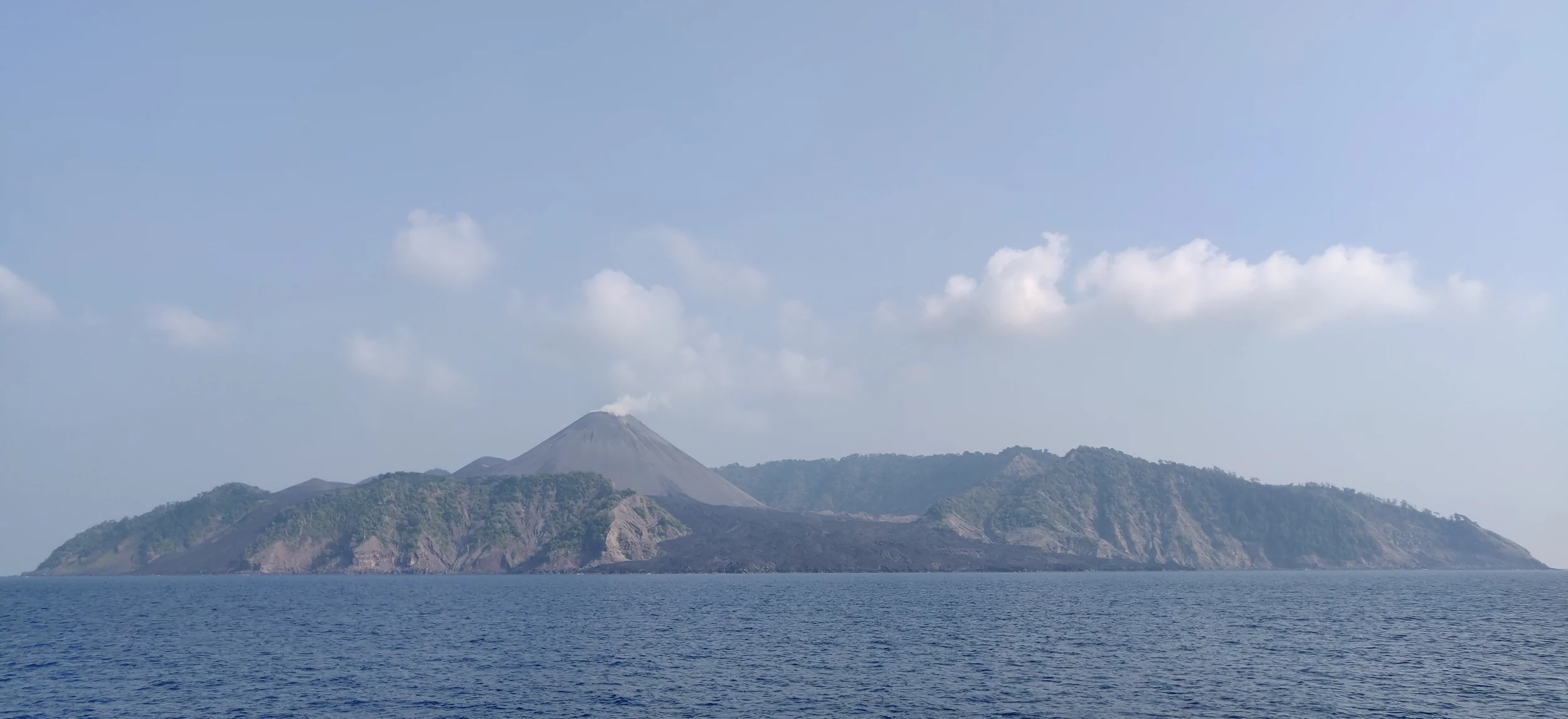
📷 The volcanic cone of Barren Island rising from the sea in the Andamans
Rohitjahnavi · CC BY-SA 3.0
Barren Island
India's only active volcano, 135 km north-east of Port Blair — visited by boat for diving and snorkelling, with landing prohibited.
Quick Information & Logistics
- What it is
- India's only active volcano — an uninhabited volcanic island in the Andaman Sea
- Distance
- ~135 km north-east of Port Blair
- Landing
- Prohibited. Everything happens from the boat or in the water
- Trip length
- A full day; longer as a liveaboard
- Activities
- Scuba diving and snorkelling offshore; dive sites en route
- Permit
- Forest Department permission, normally arranged by the operator
- Cost
- Expensive and niche — sharing a boat with a group brings it down
Overview
Barren Island lies about 135 km north-east of Port Blair, and it is India’s only active volcano — a bare cone rising straight out of the Andaman Sea, uninhabited, periodically steaming or erupting outright.
It is the most unusual trip available in the islands, and the least casual. You go by boat, you spend the day at sea, and you do not set foot on it.
Landing is not permitted
Stepping onto Barren Island is prohibited. It is a protected volcanic zone with an ecosystem that exists nowhere else, and access is closed to keep it that way.
Everything therefore happens from the boat or in the water: circling the island at a permitted distance, watching the cone, and diving or snorkelling offshore. If a trip is sold to you on the basis of walking on a volcano, that trip is not what it says it is.
Diving and snorkelling
Boats stop off the island for the water. The diving here has a reputation out of proportion to the number of people who do it — volcanic topography, black sand, dramatic drop-offs, and the sort of visibility that comes with being a long way from any river mouth.
Snorkelling trips also run, so this is not exclusively a diver’s destination, though the appeal is heavily weighted towards being underwater.
There are also many dive sites along the way. The crossing is long enough that a well-run trip breaks it up rather than simply steaming out and back, and those intermediate sites are part of what you are paying for.
What it costs, and why
This is a niche and expensive trip, and both parts follow from the geography. It is 135 km each way, it burns a full day of boat time and fuel, it needs a vessel capable of the crossing, and it requires Forest Department permission — normally arranged by the dive centre or operator rather than by you.
Going as a group brings the price down. The cost is largely the boat, and the boat costs what it costs whether four people are on it or ten. If you are travelling alone or as a pair, ask operators whether they have a departure you can join rather than chartering.
Practical notes
- Budget a whole day, and do not schedule anything for the evening.
- Weather and sea state decide everything. The crossing is open water, and trips are called off for swell that would not trouble a shorter hop. See When to visit on why clear skies do not mean a boat is sailing.
- Volcanic activity varies. It may be quietly steaming or visibly erupting, and neither is on a schedule. Nobody can promise you lava.
- Diving here suits experienced divers. Ask honestly about your logged dives when booking; this is not the place for a first open-water experience.
- Seasickness is a real consideration on a long open-water crossing — take something beforehand if you are prone to it.
- Bring more water, food and sun cover than you think a day needs.
Nearby
- Scuba diving and coral reefs — where to dive on the main islands, and how the season affects visibility.
- Havelock (Swaraj Dweep) — the main dive base, and where many Barren trips are arranged.
- When to visit — weather, sea state and what the season actually means.
Last updated on 22 August 2026. Timings, permit guidelines and schedules are subject to change. Always verify locally before traveling.