

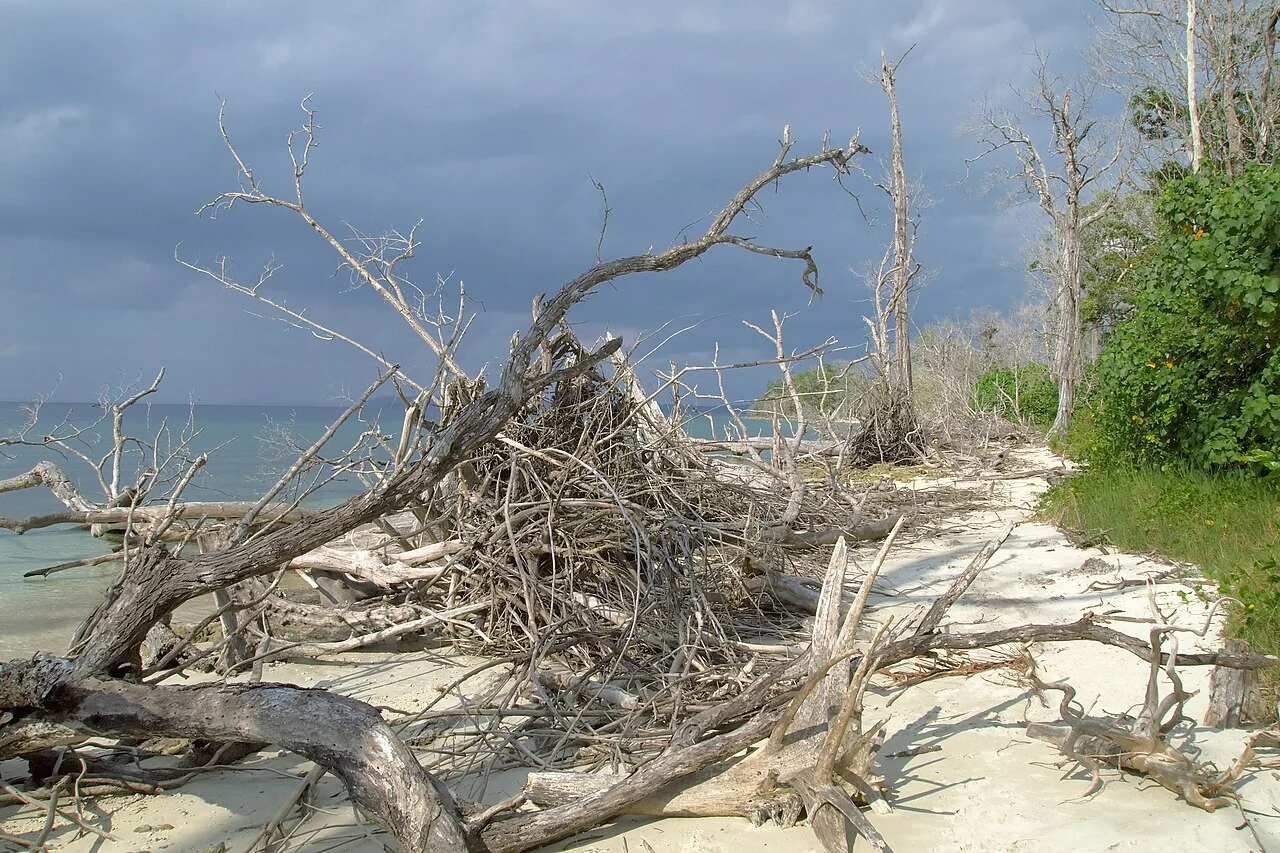
📷 Coral reef shallows and water sports hub at Elephant Beach in Havelock
Vyacheslav Argenberg · CC BY 4.0
Elephant Beach
Havelock's water-sports beach — a shallow reef metres from the sand, snorkelling, sea walk and jet-skis, reached by boat or a jungle trek.
Quick Information & Logistics
- Location
- North-west coast of Havelock
- By boat
- 20–30 min speedboat from the jetty; morning trips
- On foot
- ~2 km / 30–40 min forest trail from the road between Govind Nagar and Radhanagar; park a bike at the trailhead. Low tide only
- Trek season
- November–April only. Monsoon mud on the trail grips hard enough that even crawling does not get you through
- Sand
- Narrow white beach, fallen trees, coral rubble at water's edge
- Water
- Very shallow reef; snorkelling from the shore
- Facilities
- Activity counters, a few snack stalls, no changing rooms
- Best time
- First boats (8–9 am), high-ish tide, October–May
Overview
Elephant Beach is where Havelock does its water sports. A shallow coral reef sits right off the beach — you can be over parrotfish and clownfish two minutes after wading in — so it has become the island’s base for snorkelling, sea walks, intro dives, jet-skis, banana boats and glass-bottom boats. The beach itself is narrow and a little chaotic, with tsunami-felled trees along the tideline, but the water is the reason to come and the water is excellent.
It gets its name, locals say, from the elephants once used for logging on Havelock, which were bathed here.
Getting there
By boat (most people). Speedboats leave from Havelock Jetty in the morning (roughly 8 am onwards) and take 20–30 minutes; packages usually bundle the boat with snorkelling gear and a fixed return time. Boats do not run in rough weather and the whole beach closes in the monsoon.
On foot — the forest trail
The alternative to the boat is to walk in, and in the right months it is a genuinely good walk: about 2 km of forest trail, 30–40 minutes, ending on the same sand the speedboats pull up to.
The trailhead is on the road between Govind Nagar and Radhanagar — partway along, not at either end. There is a place to leave a scooter or bike at the start, which is how most people do it: ride out from the village, park up, and walk the rest.
The final stretch crosses tidal flats, so it is passable around low tide and not otherwise. Wear shoes you do not mind ruining, carry water, and go with someone who knows the way the first time — people do get lost.
Only walk it between November and April
This is the part to take seriously. Outside roughly November to April, do not attempt this trail.
The rains turn the trail’s mud into something most visitors have no reference for. It is not slippery the way a wet path at home is slippery — it grips. It takes hold of a foot and does not readily give it back, and the footing gets bad enough that dropping onto all fours does not reliably get you through either; on hands and knees you are simply stuck in four places instead of two.
A trail that is a pleasant forty-minute forest walk in January is a real ordeal in July, on a part of the island where help is a long way off. In those months, take the boat — and in the deep monsoon the beach is closed anyway. See when to visit for how the rest of the year breaks down.
What to do
- Snorkel the reef straight off the beach — hard and soft corals, anemones, reef fish, occasional turtles. Guides take you to the better patches a few metres out.
- Sea walk — helmet-diving on the seabed with a guide, no swimming needed.
- Intro scuba dive from the beach with one of the shops.
- Glass-bottom boat for a dry look at the reef.
- Jet-ski, banana boat, speedboat rides — fun, quick, priced per go.
- Kayaking into the mangroves next to the beach with a guide.
Practical notes
- Book activities at the counters on the beach or via your resort; there’s a lot of touting at the jetty — agree the price and what’s included (gear, guide, boat) before you pay.
- No changing rooms — wear swimwear under your clothes. A few stalls sell water, coconuts and snacks.
- Reef etiquette: don’t stand on the coral, don’t touch anything, don’t feed fish. The reef here is under heavy visitor pressure.
- Wear reef shoes or old trainers — the beach and shallows are coral rubble.
- The beach is a half-day: arrive on the first boat, leave by early afternoon before it fills up and the light drops.
Nearby
Radhanagar Beach is on the same side of the island — a natural afternoon after an Elephant Beach morning.
Last updated on 23 August 2026. Timings, permit guidelines and schedules are subject to change. Always verify locally before traveling.